



Cotton, Polyester & Blended T-Shirts: Which Fabric Works for Your Business?
Choosing the right fabric is an important part of buying bulk T-shirts. Whether you supply corporate uniforms, organize events, run a printing business, or resell plain T-shirts, the fabric you choose can affect comfort, durability, printing results, and overall cost.
Among the most popular options, cotton, polyester, and blended T-shirts each offer different benefits. Understanding their differences can help you select the right fabric for your business needs.
In this guide, we'll compare these three fabrics to help you make a smarter wholesale T-shirt buying decision.
Why Does T-Shirt Fabric Matter for Businesses?
When purchasing wholesale T-shirts, fabric selection affects more than just how a garment feels. It can influence customer satisfaction, product performance, and your business margins.
The right fabric depends on how the T-shirts will be used, your target customers, the printing method, and your budget.
Cotton T-Shirts: Best for Everyday Comfort
Cotton T-shirts are popular because of their soft feel, breathability, and everyday comfort. They are commonly used for casual wear, promotional merchandise, retail products, and many corporate applications.
Benefits of Cotton T-Shirts
- Soft and comfortable for everyday use
- Breathable and suitable for warm weather
- Popular for casual and retail clothing
- Suitable for many screen-printing and DTF applications
- Available in different fabric weights and finishes
Best for: Retail resellers, promotional merchandise, casual uniforms, and businesses looking for comfortable everyday T-shirts.
Cotton may shrink if it is not properly processed or cared for. Quality, fabric construction, and washing instructions can influence durability.
Polyester T-Shirts: Best for Performance and Active Use
Polyester is a synthetic fabric valued for its durability, quick-drying properties, and ability to manage moisture. It is frequently used in sportswear, activewear, and performance-focused apparel.
Benefits of Polyester T-Shirts
- Quick-drying properties
- Good moisture-wicking potential when designed for it
- Generally resistant to shrinking
- Lightweight options for active use
- Suitable for many sportswear and sublimation-printing applications
Best for: Sports teams, fitness brands, outdoor activities, athletic events, and performance apparel suppliers.
Polyester can feel less breathable than some cotton fabrics, depending on the construction. Printing compatibility also matters, as different printing methods work differently on polyester.
Blended T-Shirts: A Balance of Comfort and Durability
Blended T-shirts combine two or more fibres, commonly cotton and polyester. The aim is to balance the comfort of cotton with some of the durability and easy-care benefits of polyester.
The final performance depends on the blend ratio and how the fabric is constructed.
Benefits of Blended T-Shirts
- Balance of comfort and durability
- Often easier to maintain than some pure-cotton options
- Can offer improved shape retention
- Available in different weights and finishes
- Suitable for various promotional and everyday applications
Best for: Corporate uniforms, promotional campaigns, event merchandise, and businesses looking for a versatile fabric option.
The feel, breathability, appearance, and printing performance vary depending on the fibre ratio. Always check the actual fabric composition before placing a bulk order.
Cotton vs Polyester vs Blended T-Shirts
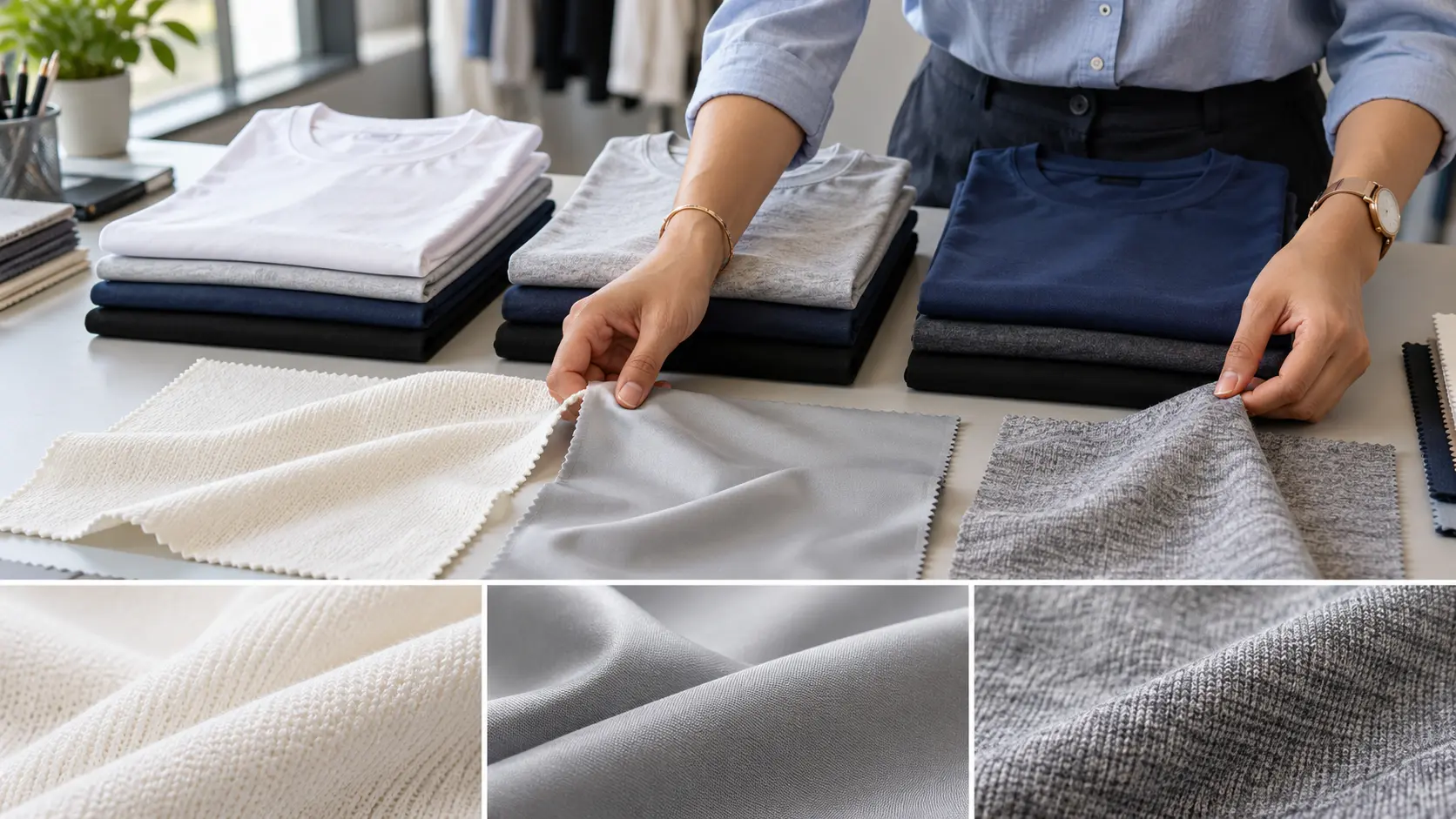
Here's a quick comparison to help you choose the right fabric for your business.
| Factor | Cotton | Polyester | Cotton-Polyester Blend |
|---|---|---|---|
| Comfort | Soft and breathable | Depends on construction | Balanced, depending on blend |
| Moisture Management | Absorbs moisture | Often dries quickly | Depends on fibre ratio |
| Durability | Depends on quality and construction | Generally durable | Often offers a useful balance |
| Shrinkage | Can shrink if untreated | Generally low | Depends on composition and finishing |
| Screen Printing | Commonly suitable | Requires suitable inks and process | Depends on blend and printing method |
| Sublimation | Generally unsuitable for standard sublimation | Commonly suitable | Results depend on polyester content |
| Common Uses | Casual wear and retail | Sportswear and activewear | Uniforms and promotional apparel |
Tip: These are general characteristics. Actual performance depends on fabric quality, construction, finishing, and care.
Which Fabric Is Best for Corporate Uniforms?
For corporate uniforms, consider comfort, appearance, durability, and how frequently employees will wear and wash the T-shirts.
- Cotton: A good option when everyday comfort and breathability are priorities.
- Polyester: Worth considering for active roles and performance-oriented uniforms.
- Blended Fabric: A versatile option when you want to balance comfort with easy-care properties.
Before placing a large order, check the fabric, size consistency, colour availability, and branding requirements.
Which Fabric Is Best for Printing Businesses?
If you purchase plain T-shirts for printing, choose the fabric according to your printing process.
- Screen Printing: Cotton and suitable blends are common choices, but the ink and garment must be compatible.
- DTF Printing: Can work on cotton, polyester, and many blends when the transfer and application settings are appropriate.
- Sublimation Printing: Works best on white or light-coloured polyester garments designed for sublimation.
- Heat Transfer: Compatibility depends on the transfer material, fabric, and application temperature.
For bulk printing orders, test a sample before committing to a large quantity. This helps you check print appearance, adhesion, colour quality, and performance after washing.
How to Choose the Right Fabric for Your Business
Before buying wholesale T-shirts, ask yourself these questions:
Retail customers, employees, sports teams, or event participants may have different requirements.
Casual wear, uniforms, sportswear, or printed merchandise may call for different fabrics.
Confirm fabric compatibility before ordering.
Compare the overall value rather than choosing by price alone.
Check whether the supplier can provide consistent fabric, colours, sizes, and quantities.

A small sample order can help you assess the fabric before investing in bulk stock.
Why Choose the Right Wholesale T-Shirt Supplier?
Even the right fabric may not deliver the expected results if quality varies between batches or the required sizes and colours are unavailable.
When choosing a wholesale T-shirt supplier, look for:
- Consistent fabric quality
- Clear GSM and composition details
- Reliable size and colour availability
- Suitable options for printing and customization
- Transparent bulk pricing
- Clear stock and dispatch timelines
A dependable supplier makes it easier to manage inventory, meet customer expectations, and plan repeat orders.
Choose the Right T-Shirts with Sweet Ginger
At Sweet Ginger, we understand that every business has different T-shirt requirements. Resellers may prioritize customer demand and margins, while corporate buyers may focus on comfort and consistency. Printing businesses need garments that suit their chosen printing method.
We help B2B buyers explore plain T-shirt options across different styles, fabrics, GSMs, colours, and sizes for their business requirements.
Whether you need T-shirts for reselling, corporate uniforms, promotional campaigns, events, or printing, choose your fabric based on its intended use and the needs of your customers.
Looking for bulk T-shirts for your business? Contact Sweet Ginger to discuss your requirements and bulk pricing.
Frequently Asked Questions
1. Which fabric is best for bulk T-shirts?
It depends on the intended use. Cotton is popular for everyday comfort, polyester is often used for sportswear, and blended fabrics can provide a balance of different properties.
2. Are cotton T-shirts better than polyester T-shirts?
Neither is universally better. Cotton is often preferred for its soft, breathable feel, while polyester is valued for quick drying and performance applications.
3. Are blended T-shirts good for corporate uniforms?
Yes, suitable cotton-polyester blends can be a practical option for corporate uniforms because they can balance comfort, durability, and easy care. The best choice depends on the blend ratio and working conditions.
4. Which T-shirt fabric is best for screen printing?
Cotton is a common choice for screen printing, but suitable polyester fabrics and blends can also be printed with compatible inks and processes. Always confirm compatibility with your printer.
5. Which fabric is best for sublimation printing?
Polyester is generally the preferred fabric for sublimation printing. White or light-coloured polyester garments designed for sublimation typically produce the most suitable results.
6. What should I check before buying wholesale T-shirts?
Check fabric composition, GSM, stitching, size consistency, colour availability, printing compatibility, stock levels, delivery timelines, and overall pricing.
Final Thoughts
Cotton, polyester, and blended T-shirts each have their own advantages. The right option depends on your customers, intended use, printing requirements, and budget.
Choose cotton for everyday comfort, polyester for many performance applications, and blended fabrics when you need a balance of properties.
Always check the actual fabric specifications and test samples before placing a large order.
With the right fabric and a reliable supplier, you can make better bulk purchasing decisions and offer products that meet your customers' expectations.
Looking for T-Shirts for Your Next Bulk Order?
Explore Sweet Ginger's range of plain and polo T-shirts for resellers, corporate teams, event organizers, printing businesses, and B2B buyers.
Explore Sample Kit